

As early as Monday the 21st, birders began making noises about the weekend’s forecast. If the upcoming cyclone played out the way it looked like it might, Cape Cod could be in for some spectacular storm birding. While in the end this nor’easter didn’t quite hit Massachusetts in the same way early forecasts made it look, it still produced some excellent storm birding. Where and when seabirds were moving during the entire weather event was well documented by birders, and these observations can hopefully inform others during similar storms in the future. Below is a play-by-play of what the birds and the weather were doing during this nor’easter.
Before the storm
The stars of this event were undoubtedly Leach’s Storm-Petrels (Hydrobates leucorhous). The first bird of this storm may have been one individual found in South Hadley(!) by Ted Gilliland on the 22nd. The northeast winds had started to strengthen over the ocean that morning (~20 mph in the Gulf of Maine), but were not strong inland yet. And, as Ted mentions in his eBird comments, there are several inland records of Leach’s Storm-Petrels around this time of year that are apparently unrelated to significant weather events. For these reasons, it is not clear if this bird was truly related to the nor’easter, but the species’ later ubiquity during this storm and its appearance on the day the northeast winds began means it is worth mentioning. Throughout the day the winds strengthened and Leach’s Storm-Petrels began moving into the Cape Cod Bay. Sandy Neck Beach had some Parasitic Jaegers (Stercorarius parasiticus) in the morning and storm-petrels near shore in the afternoon.
On Wednesday the 23rd, northeast winds began to strengthen. North of Cape Cod wind speed was still in the 20s mph, but further south it was in the 30s. This huge band of northeast winds covered the ocean across most of the northeastern United States. Over land along the coast the wind began to strengthen as well. For Massachusetts, this unrelenting wind would continue to pile birds, especially Leach’s Storm-Petrels, into the bay. That morning there was a jaeger reported from Plymouth Beach, and that afternoon a Northern Fulmar (Fulmarus glacialis), Red-necked Phalarope (Phalaropus lobatus), some jaegers, and dozens of storm-petrels (some over the beach) were seen in Dennis. A fulmar was also seen in Nauset on the ocean side.
Thursday the 24th continued the pattern, with persistent coastal northeast winds and more seabirds. In the morning Manomet Point had some storm-petrels, and Plum Island had a fulmar. That afternoon, Manomet had 6 fulmars, Race Point had 13, and storm-petrel numbers at Sandy Neck continued, apparently heading east.
On Friday the 25th, the winds continued to strengthen and a tighter storm center started to form off of North Carolina. More of the same birds were reported from Manomet, Sandy Neck, and a couple storm-petrels were seen elsewhere in Sandwich. In the afternoon, Brian Zylich found an Arctic Tern (Sterna paradisaea) at the Quabbin Reservoir. That evening, the northeast winds north of the cape strengthened, and the rain hit as well.
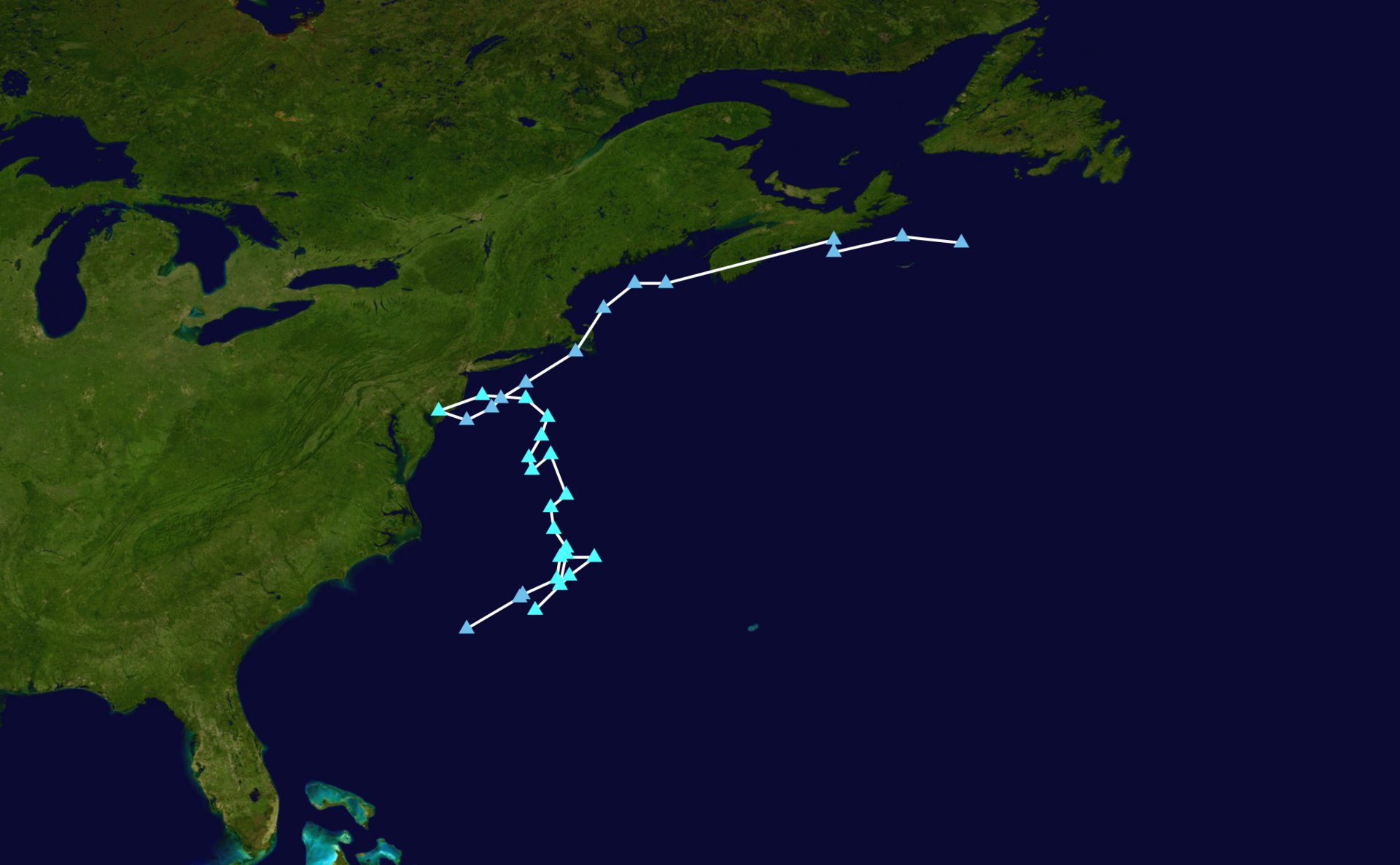
Track of the September 2026 nor’easter by “Hurricane Jacob” on Wikipedia.
Saturday the 26th
By early morning on Saturday, the rain hit the southeastern half of the state, and the winds had strengthened in and around the bay. As the day progressed, the rain spread inland and the wind speed continued to increase (low 30s mph with gusts up to 40 mph measured from Provincetown). The continuous winds for the last four days had apparently caused a lot of seabirds to move into the bay, and now the strongest part of the storm was beginning to hit Cape Cod. Manomet had more fulmars and Rockport had some movement, but the biggest show was on the cape. In the morning, birders at Sandy Neck counted 652 Leach’s Storm-Petrels headed eastbound. Additionally they had many Parasitic Jaegers, some Red Phalaropes (Phalaropus fulicarius), Northern Fulmars, and one Long-tailed Jaeger (Stercorarius longicaudus). Despite the large apparent eastern movement, First Encounter Beach and Brewster were quiet (presumably due to the ever present northeast winds). It isn’t clear where exactly this movement stopped between Barnstable and Brewster. Race Point also had many jaegers and a South Polar Skua (Stercorarius maccormicki). That morning was also when birds began piling into the east end of the Cape Cod Canal, with a couple dozen Leach’s Storm-Petrels observed fighting the wind and trying to exit around 11 AM. At this time at least, the birds were apparently not pushed as deep as the Sagamore Bridge. The only storm-petrel birders had at that location was flying high over land(!), headed west with the wind.
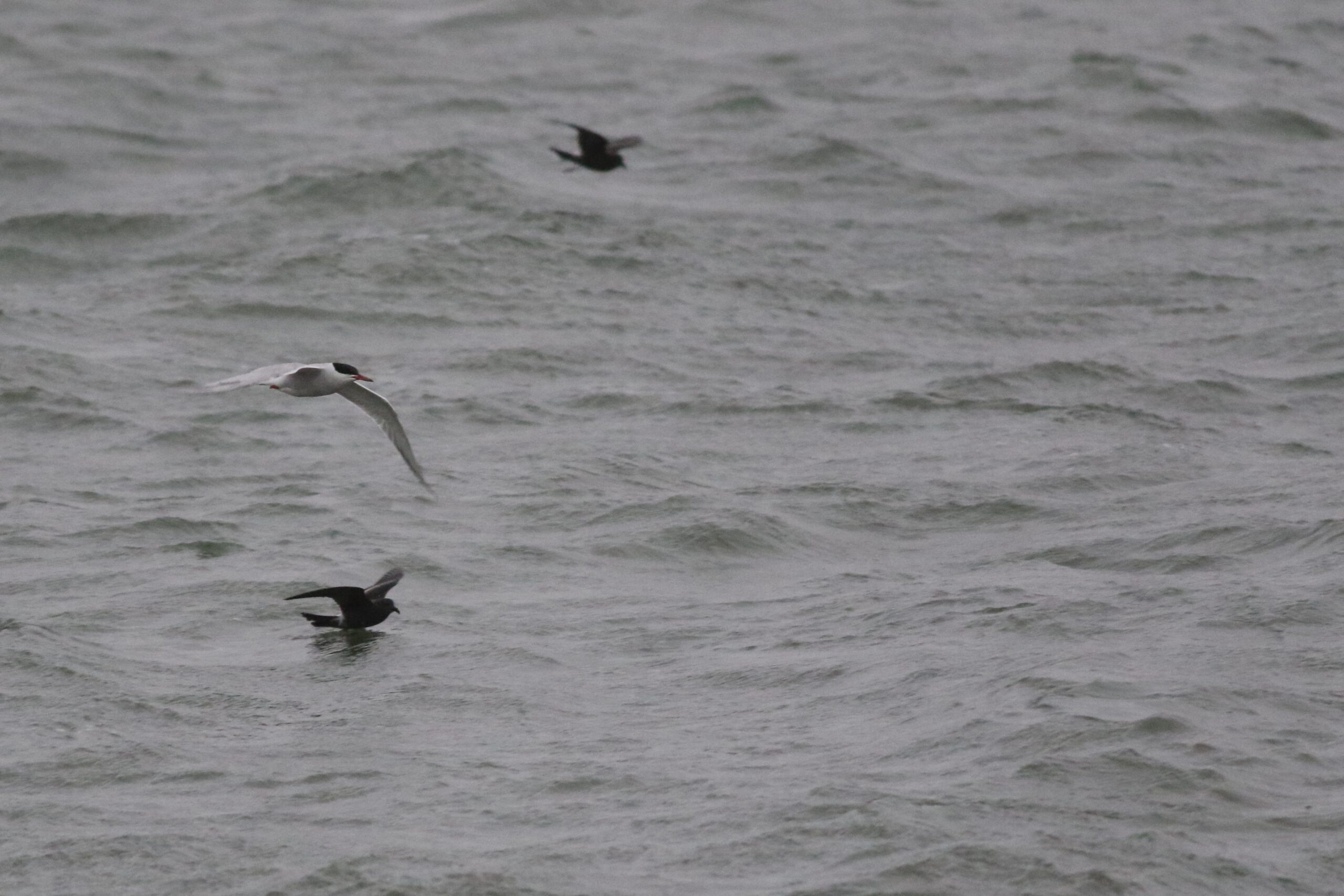
Leach’s Storm-Petrels in the Cape Cod Canal, 26 September, 2026. Photo by Lily Morello
Based on eBird reports, the storm-petrels streaming east from Sandy Neck slowed by late morning, but more and more piled into the entrance of the Cape Cod Canal as the day progressed and the weather worsened. By midday, storm-petrel counts in the canal reached over 100, and were accompanied by at least one Sabine’s Gull (Xema sabini). In the afternoon, counts surpassed 200 and a Long-tailed Jaeger joined them. Some storm-petrels were inside the East Boat Basin at the Sandwich Marina, and several flew over land. Red-necked Phalaropes, Black Terns (Chlidonias niger), at least one Northern Gannet (Morus bassanus), and even some Common Mola (Mola mola) were also in the canal itself. Among the storm-petrels in the canal and at Sandy Neck, the vast majority were Leach’s. Despite much coverage and scrutiny by birders, only a handful of Wilson’s Storm-Petrels (Oceanites oceanicus) could be picked out. Sometimes none were present at all. Many storm-petrels and some Parasitic Jaegers were also present outside the mouth of the canal into the late afternoon. And as the sun set, many storm-petrels were observed still present inside the canal by the Sandwich Marina.
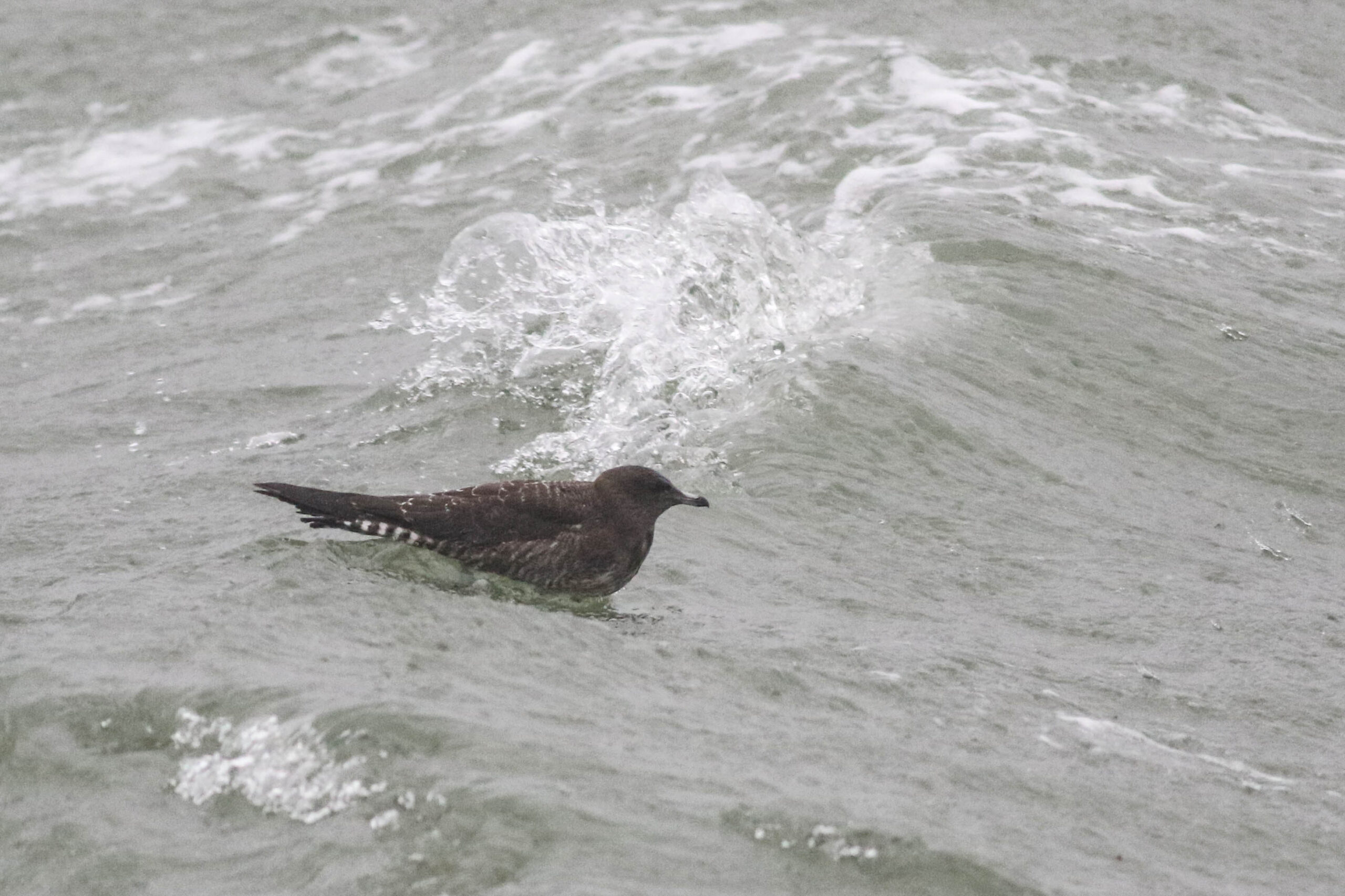
Long-tailed Jaeger in the Cape Cod Canal, 26 September, 2026. Photo by Lily Morello.
Sunday the 27th
On Sunday morning, the rain was mostly inland, and over the upper and mid cape. The lower and outer cape only had a few passing showers. Winds on the bay side weakened, especially around Dennis, Brewster, and Eastham, and shifted more easterly later in the morning. By 11 AM the eye had made landfall in New Jersey. Storm-petrels in the canal were now in significantly fewer numbers, but they began trickling out. Presumably the majority of birds exited the canal overnight or in the early dawn before birders arrived. Rockport had some jaeger movement, and in the morning only a few storm-petrels were reported from Sandy Neck. First Encounter Beach was similarly lacking in all but Parasitic Jaegers. The winds had presumably not weakened enough for these locations to have significant movement. Manomet Point, however, seemed to be the place to be Sunday morning, with nearly 200 Leach’s Storm-Petrels, some fulmars, and some jaegers. Birds here were mostly headed northwest. Race Point had many jaegers, a South Polar Skua, some Sabine’s Gulls, and many Wilson’s Storm-Petrels. Ocean side on the outer cape had some shearwater and tern movement, but did not seem to have consistent large numbers during mid morning. Nearing noon, Sandy Neck seemed to have some smaller storm-petrel movement and a few jaegers (including a Long-tailed), all headed east. Throughout the day, storm-petrels continued to exit the canal (along with Black Terns and Red Phalarope) and many were still present near the mouth. That afternoon some inland shorebirds were observed in Hampden County, and a Hudsonian Godwit was found at Plymouth Airport.
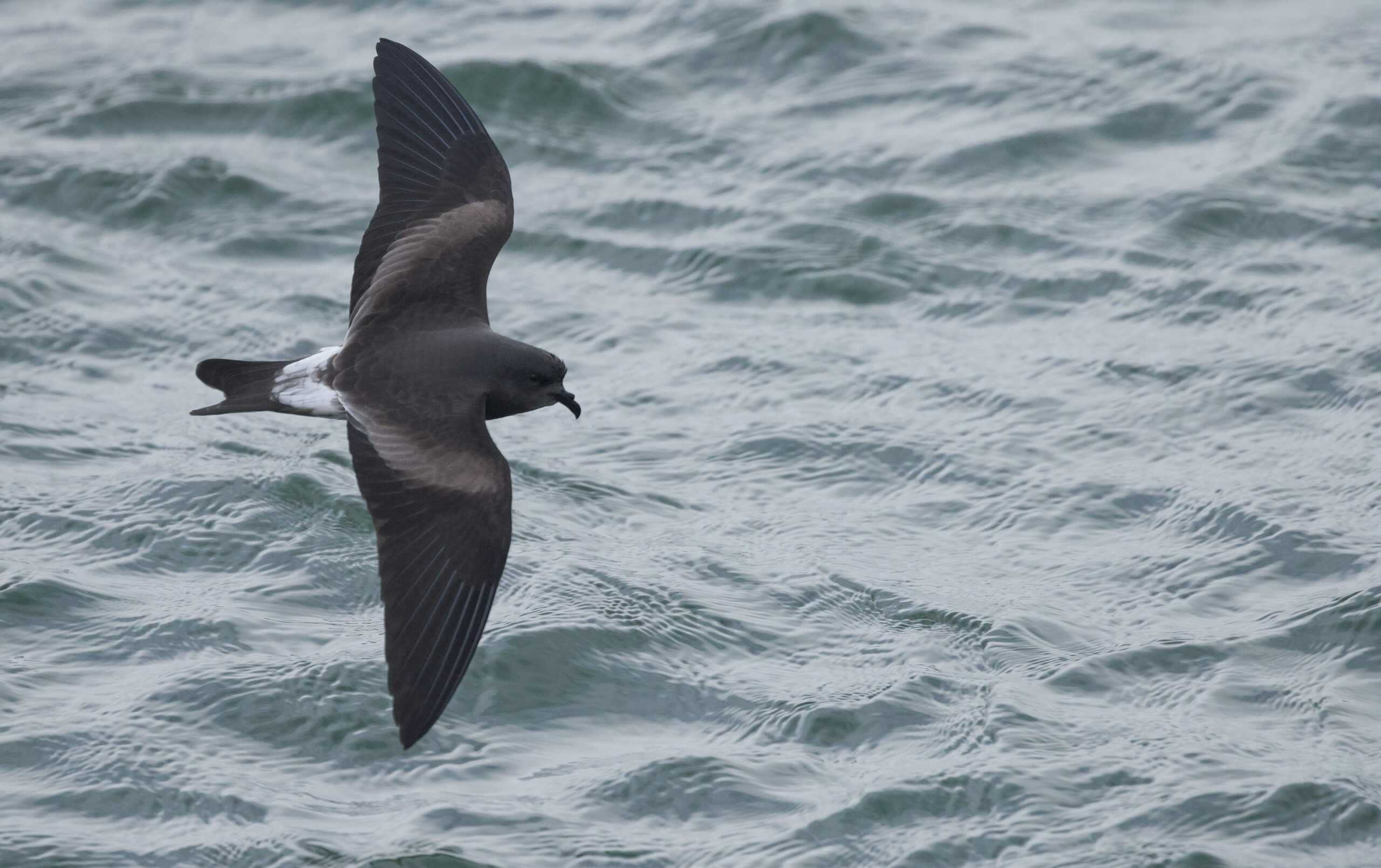
Leach’s Storm-Petrel in the Cape Cod Canal, 27 September, 2026. Photo by Will Sweet.
Monday the 28th
On Monday morning the storm center was over the water again, and some weaker and more inconsistent northeast winds persisted. Throughout the day the center headed northeast towards Cape Cod and eventually crossed it overnight. Rain was also consistent throughout most of the state on Monday. No storm-petrels were seen in the canal, and First Encounter Beach continued to have nothing of note. Manomet Point had a few storm-petrels and jeagers, but nothing like Sunday’s exodus. In Wellfleet however, a Brown Booby (Sula leucogaster) (a species on the state review list) was photographed sitting on a beach. Additionally there were some inland shorebirds at the Cambridge Reservoir in Waltham.
Tuesday the 29th
During the early morning, the winds shifted to the northwest as the storm center passed over the cape. While weaker, winds continued to shift west later in the day, and by Tuesday evening the winds had died down. Some storm-petrels were still hanging around Sandy Neck into the afternoon. Despite Monday’s lull in seabird movement, there were apparently still good numbers of birds in the bay as birders at First Encounter Beach had a fantastic morning. Highlights include jaegers, at least one South Polar Skua, multiple Sabine’s Gulls, many Leach’s Storm-Petrels, and some Northern Fulmars. A Common Tern was also photographed at Lake Massapoag in Sharon.
Discussion
Overall this was a fantastic storm for seawatching. The relentless northeast winds that persisted for nearly six days pushed a great deal of seabirds into Cape Cod Bay, and many into the canal itself. Despite the winds weakening on Sunday, First Encounter Beach did not have its usual exodus until the winds completely shifted northwest Tuesday morning. To me, what seems notable about this storm is the species composition. Inside Cape Cod Bay the storm-petrels were nearly all Leach’s, with very few Wilson’s. Outside of the bay it seemed to be the exact opposite. There also seemed to be very few phalaropes during this storm. This is perhaps due to the time of year, but a similar cyclone a couple weeks earlier in 2023 (Hurricane Lee) produced numerous phalaropes. Inland shorebirds didn’t really start appearing until after Saturday. After the storm had passed, folks on boats on the Stellwagen Bank reported higher concentrations than usual of foraging seabirds. As is the case with all well-birded storms, this has added to our collective knowledge of what birds do in storms, and where birders may want to be when something similar happens again!